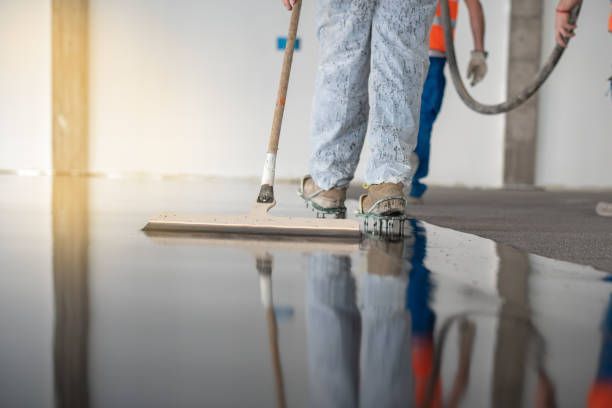
Polyaspartic vs. Epoxy Garage Floor Coating
The Complete Winter-Ready Guide
Temperatures are already dropping across the Waterloo Region, and salt trucks won't be far behind. Every winter, your garage floor absorbs the worst of the season road salt dragged in on tires, melting snow, and months of freeze-thaw cycling that most other floors in the house never have to deal with. If you're weighing polyaspartic against epoxy before the season turns, here's what actually matters for a Waterloo garage specifically, not just general advice that could apply anywhere.
Why This Decision Shouldn't Wait Until Spring
Most homeowners start researching garage floor coatings in spring, once the salt damage from winter is staring back at them. By then, you're coating over a floor that's already taken a beating. Getting ahead of it this fall means starting with a clean, undamaged slab instead of patching around problems that already exist and it opens up an option a lot of people don't realize is available this late in the year: polyaspartic can still be installed even as temperatures fall, where epoxy generally can't.
Polyaspartic vs. Epoxy: What's Actually Different
Both are protective coatings for concrete, but they cure differently, and that difference shapes almost everything else about how they perform. Epoxy cures through a slow chemical reaction between its resin and hardener, which is why most epoxy installations need three to four days before you can park on them again. Polyaspartic is an aliphatic polyurea topcoat that also cures chemically, just in hours instead of days — which is why a polyaspartic garage floor coating in Waterloo can often go from bare concrete to drive-on-ready in a single day.
The chemistry difference also shows up in how each coating looks over time. Polyaspartic is UV-stable, so it holds its colour even in a garage entry that gets direct sun for part of the day. Epoxy can gradually amber or yellow under the same conditions.
How Each Coating Actually Holds Up Through an Ontario Winter
This is where the comparison gets specific to where you live. Ontario winters put a coating through repeated freeze-thaw cycles, plus heavy exposure to road salt brine tracked in from the driveway. Over time, that combination finds any weak point in a coating — usually at the edges, the garage door threshold, or anywhere the seal was thin to begin with. Once brine works its way underneath, you start seeing the lifting and chipping that shows up around year five to seven on a lot of epoxy floors.
Polyaspartic's cold-application ability matters more here than it might seem. Its fast chemical cure keeps working in the cold, so it can be installed in temperatures well below freezing, whereas epoxy's reaction slows sharply in a cold garage and generally needs a warmer ambient and slab temperature to cure the way it's supposed to. That's a real advantage for anyone trying to get a coating done in late fall or even into winter, without waiting for spring.
Longevity follows the same pattern: a properly installed polyaspartic floor commonly lasts fifteen to twenty years or more, while epoxy more typically holds up for five to ten, especially on a floor that sees a full Ontario winter every year.
| Polyaspartic | Epoxy | ||
|---|---|---|---|
| Same day to next day | 3–4 days minimum before use | ||
| Cure / drive-on time | Fast chemical cure that keeps working below freezing | Needs warmer ambient and slab temperatures to cure properly | |
| UV stability | Stays true to colour, won't yellow in sunlit garage entries | Can amber or yellow over time with UV exposure | |
| Typical lifespan | 15–20+ years with proper installation | Commonly 5–10 years, especially under repeated winter stress | |
| Where it tends to fail first | Rare when properly prepped and installed | Edges and thresholds, where salt brine works into small breaks over repeated freeze-thaw cycles |
The Step Most Companies Skip: Why Surface Prep Decides Whether Either Coating Lasts
Neither coating is going to outperform the concrete underneath it. This is the part that gets glossed over in most "polyaspartic vs. epoxy" comparisons, and it's the actual reason a lot of DIY and even some professional installs fail early: the concrete has to be mechanically opened up to the right profile before anything goes on top of it.
Acid etching, the shortcut a lot of DIY kits recommend, only lightly roughens the surface and doesn't come close to the CSP (concrete surface profile) a coating actually needs to bond for the long haul. Professional diamond grinding gets the slab to a proper CSP 2–3 profile — the same standard our crews use on every concrete surface preparation and grinding project which is the difference between a coating that's still intact in year fifteen and one that's already peeling in year three.
If Your Slab Already Has Cracks, Pitting, or Salt Damage (Read This First)
Coating over an existing crack or a patch of salt-pitted concrete doesn't hide the problem, it just telegraphs it straight through the new coating within a season or two. Before either polyaspartic or epoxy goes down, any cracking, spalling, or road-salt pitting needs to be addressed on its own.
Rigid hydraulic cement, the old standby for crack filling, tends to fail under exactly the freeze-thaw cycling Waterloo garages see every winter — it doesn't flex, so it cracks again. A flexible polyurea or epoxy crack filler moves with the slab instead of fighting it, and control joints get filled the same way for a clean, monolithic look once the coating goes on. If your garage floor has visible cracking or the pitted, flaking texture that road salt leaves behind, that's a concrete crack repair conversation to have before you pick a coating, not after.
Don't Forget Traction Slip Resistance for a Snowy, Wet Garage
Winter boots, melting snow, and road slush make for a genuinely slippery combination on a smooth coated floor. It's worth thinking about texture and traction alongside the polyaspartic-vs-epoxy decision, not as an afterthought. A decorative flake system a full broadcast of coloured vinyl chips locked into the topcoat adds real grip underfoot along with a finished look, and both polyaspartic and epoxy can be finished this way. If you've ever wondered whether epoxy floors are slippery in the first place, the answer comes down to the finish, not the coating underneath it. If safety on a wet, icy floor is a priority for your household, it's worth asking about a slip-resistant finish when you're getting your quote, whichever base coating you land on.
So, Which One's Right for Your Garage?
If speed and long-term winter durability matter most to you you want your garage back in a day, and you'd rather not think about this again for fifteen-plus years polyaspartic is the stronger fit for an Ontario climate. If epoxy is the direction you're leaning for other reasons, garage epoxy floors are still a reasonable choice, as long as you go in clear-eyed about the shorter lifespan and the extra care needed at edges and thresholds through the winter.
Either way, the honest starting point isn't the coating — it's the slab. A quick on-site look at your existing concrete tells us whether you're dealing with a straightforward install or whether grinding and crack repair need to happen first. That's the assessment we'd walk through on a free quote, and it's the first step on every concrete floor coating job we take on across the Waterloo Region, from home garages to commercial epoxy floors in local shops and warehouses.
Frequently Asked Questions
Can polyaspartic be applied in cold weather in Ontario?
Yes. Because polyaspartic's fast chemical cure keeps working in cold temperatures, it can be installed in temperatures well below freezing, which is why it's a practical option for late-fall and winter installations that epoxy generally can't handle.
How long does a polyaspartic garage floor coating actually last?
With proper surface preparation and installation, fifteen to twenty years or more is typical — noticeably longer than the five-to-ten-year range most epoxy coatings see under regular Ontario winter conditions.
Can you coat over a cracked or pitted concrete garage floor?
Not if you want the coating to last. Hairline surface cracks are one thing, but structural cracks, spalling, or road-salt pitting will telegraph through a new coating within a season or two if they aren't repaired first with a flexible crack-filling system.
Is diamond grinding really necessary, or can I acid etch the floor myself?
Acid etching only lightly roughens the surface and doesn't achieve the concrete surface profile a coating needs to bond properly long-term. Professional diamond grinding is the standard for a reason — it's the single biggest factor in whether a coating lasts fifteen years or starts peeling within a few.
Are flake or textured coatings actually more slip-resistant in winter?
Yes. A full broadcast flake finish adds real texture underfoot, which makes a noticeable difference for traction when boots, melting snow, or slush are involved — worth asking about regardless of which base coating you choose.
Ready to Get Started?
If you're weighing epoxy vs. polyaspartic flooring for your Waterloo garage, the fastest way to get a straight answer is a free on-site assessment. Call us at 226-444-0153 or
request your free quote today, and we'll tell you exactly what your slab needs before you spend a dollar on a coating.